

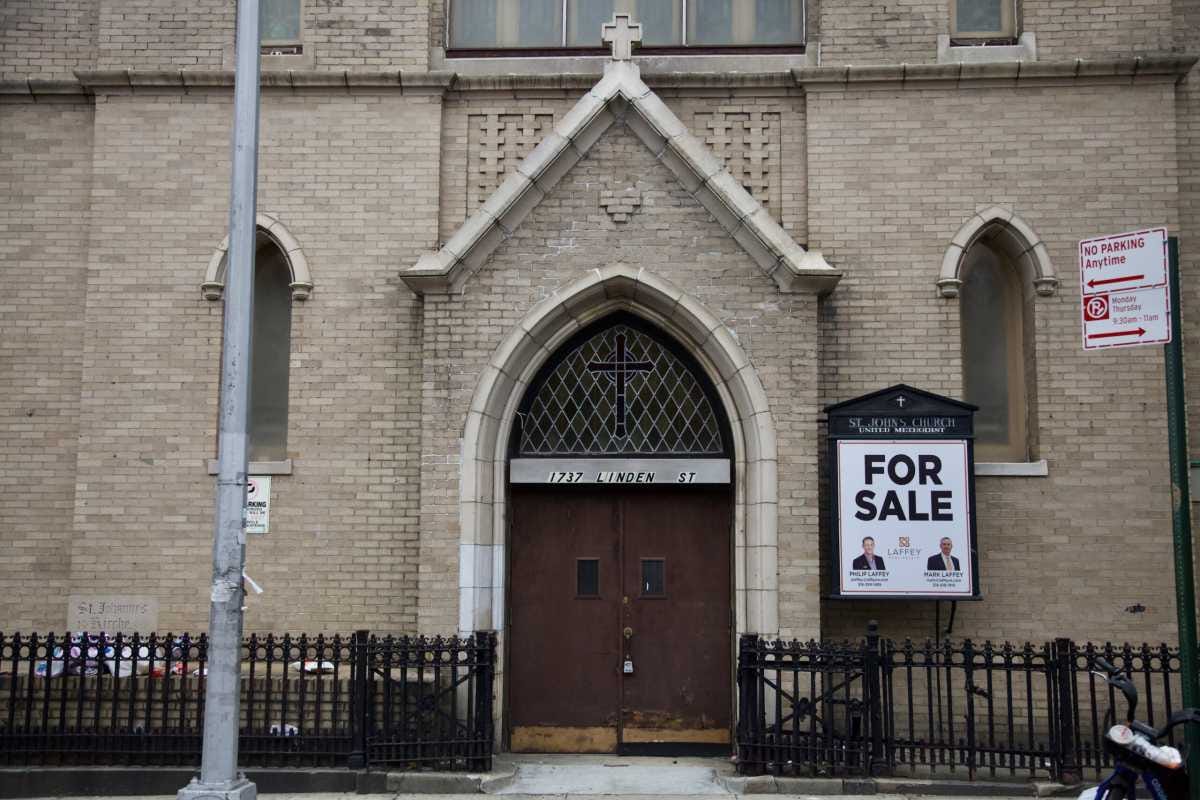
This article is the first in a series by Evan Magen.
Housing is “what dying churches do,” according to many pastors. I think this is a problem for housing advocates, even if the data point to a growing number of dying churches:
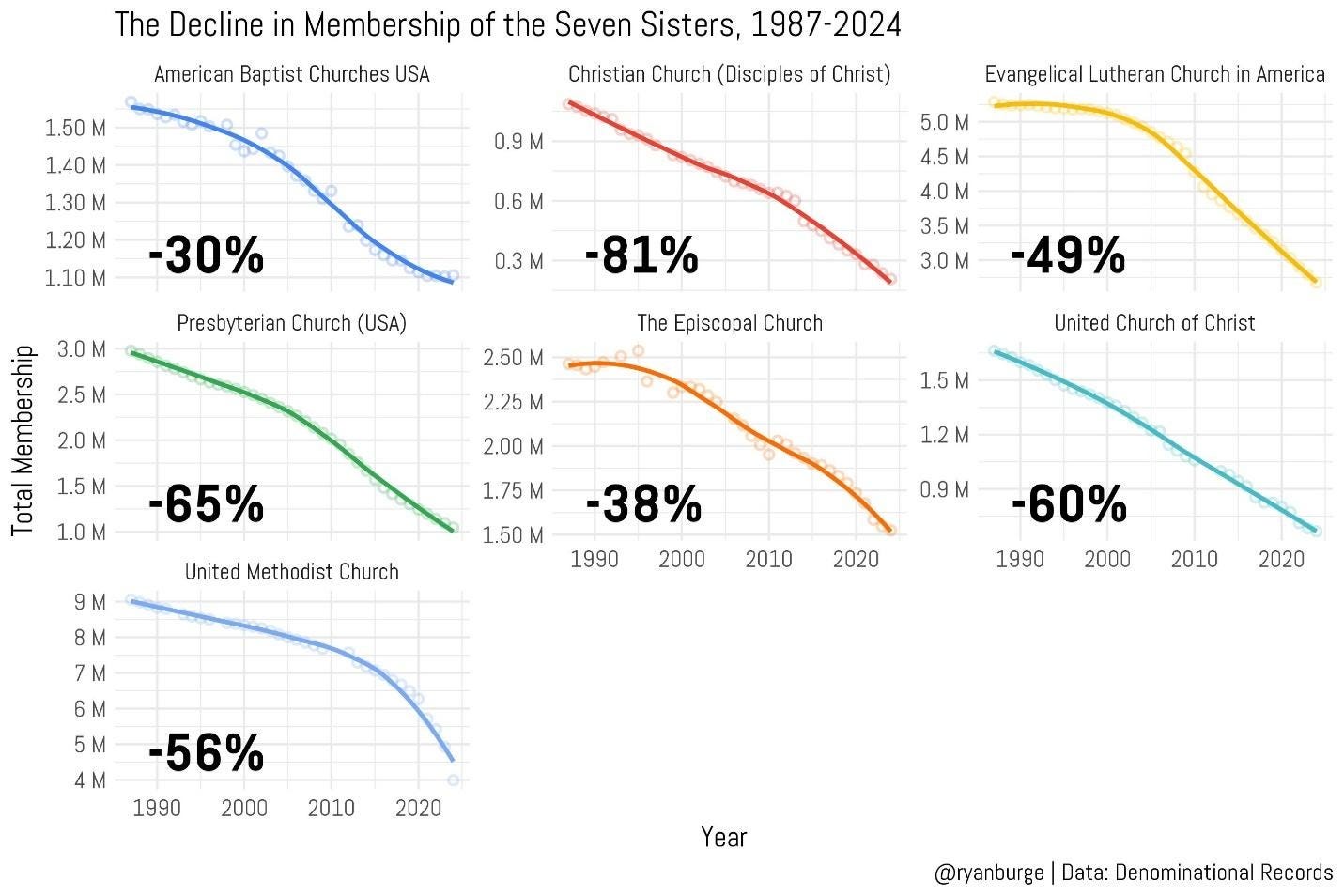
If faith-based housing is only in an exit strategy for church decline, then its impact and scale will never grow to its potential. Church growth and decline are the most sensitive topics in congregational life. Faith-based housing advocates need to think carefully about how to respond.
Throughout this series, we will explore the connections between church growth and faith-based housing and how housing advocates can understand church growth.
No one wants to be a dying church, especially the dying ones.
If housing is only associated with decline, then congregations will always associate their grief with the housing development. That is not how anyone wants to start a project.
More vibrant churches will avoid faith-based housing discussions altogether. There is an idea that decline is contagious. Once a ministry or theology is marked as a symptom of decline, it is treated as a leper.
But beyond public image, there is a deeper tension. More churches with unused land means more opportunity for faith-based housing. Does that mean faith-based housing developers stand to benefit from church decline?
If a builder’s answer is yes, then they will likely have a hard time developing trust with congregations. Most people do not willingly enter partnerships where the other will benefit from your failure. These projects will come from churches already in unavoidable decline with few options.
That is an extreme case, but I think there is a more generally accepted ambivalence. Housing advocates don’t care if the church lives or dies. They are more interested in the future of the land as housing or non-profit space. This is even true of many mainline clergy, too.
There is a fatalism that churches are going to die, and so they might as well build or become housing. This is a noble use of church land, but it is not a foregone conclusion. This expectation of church decline will make faith-based housing less competitive and innovative in the long run.
This ambivalence and fatalism are the current default. But it is a choice, not an inevitability. Faith-based housing advocates can choose a different posture.
I propose two principles to reframe the YIGBY response to church decline:
First, faith-based housing advocates should lament the decline and closure of local churches. Fewer churches mean fewer partnerships. Smaller congregations mean fewer advocates. It is especially important for advocates outside of the church to remind clergy and congregations how necessary they are in the broad response to the housing shortage.
Second, builders should decouple from decline. There is opportunity for partnership with large, vibrant churches. When Crosspointe Church in Cary, North Carolina was planning to expand on its 38-acre campus, it partnered with the YMCA to share the space. Now, there is a thriving church and recreation space.
Crosspointe didn’t wait for decline to think creatively about its land. Housing developers can make the same case: a church that engages housing as mission, not last resort, is a more generative long-term partner.
These two postures might seem to pull in opposite directions. One asks advocates to sit with grief, the other to look past it. But they’re sequential, not contradictory. Lament earns trust; decoupling earns partnership. A builder who acknowledges what a congregation is losing has more credibility when they argue that a new project is about mission, not mortality.
In practice, this means leading with a church’s mission rather than its vacancy— asking “Who is my neighbor?” before “How much of your parking lot do you actually use?”
A throughline of this series is that faith-based housing is not about church growth or decline, but the mission of the church. Across church history, the values of faith have been accomplished in life and in death. Growing churches and dying churches are both called to act faithfully, and that includes building housing.
Growth and decline are pivotal moments in the lifespan of a church that test a congregation’s values. These are moments where housing advocates can engage, not with attendance numbers, but with the values that reject the certainty of “what dying churches do” and the entitlement of fatalism.
Evan Bille Magen lives in Durham, NC and serves as the Director of Missions and Community Outreach at the Kirk of Kildaire. He is a recent graduate of Union Presbyterian Seminary and candidate for ordination in the Presbyterian Church (PCUSA). You can find his Substack “Public Goods” here.
 | A guest post by
|
Faith based housing can be for the planting, growing, thriving church. No church is dying. All churches are being transformed and some simply look different than they did before. Evan, so thankful for your work in this space.