

This article is an interview with Sam Weisler.
To start, who are you and how did this project come about?
I am a young urban designer and Architect-in-training based in Charlotte, NC with a focus on designing beautiful buildings, walkable neighborhoods, and places people want to be. I recently collaborated with Ryan Kilpatrick at Flywheel Momentum, to help the city of Kalamazoo, MI reimagine some underutilized land. After I designed a vision, Ryan and his team provided fiscal data of the resulting tax base showing that good design isn’t just beautiful, but well worth the city’s support. (Read Ryan’s Article)
Project 1: Church Parking Reimagined (Douglas & Paterson)
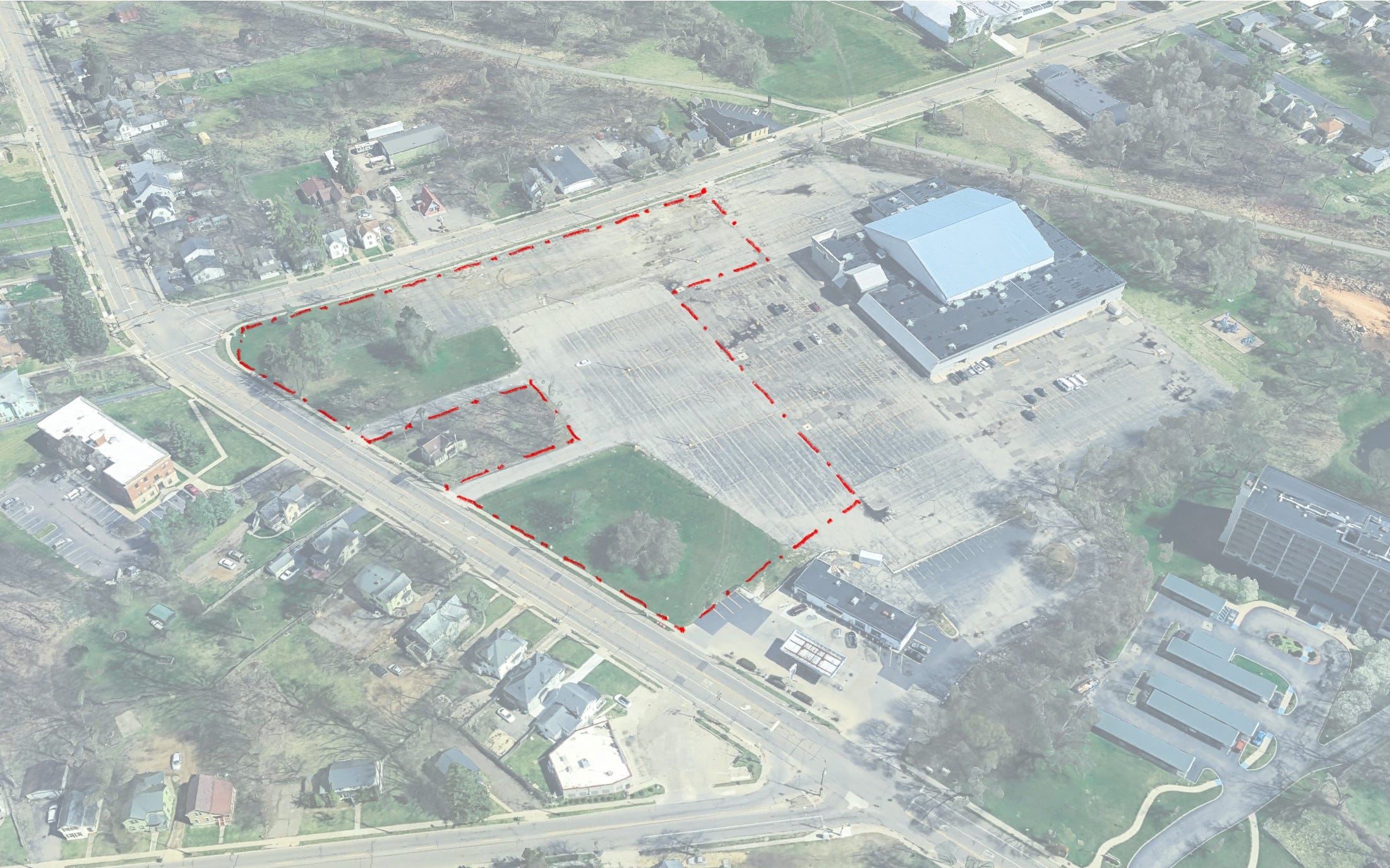
Tell us a bit about the project. Where is it, how large is it, and what are the characteristics of the site as it is?
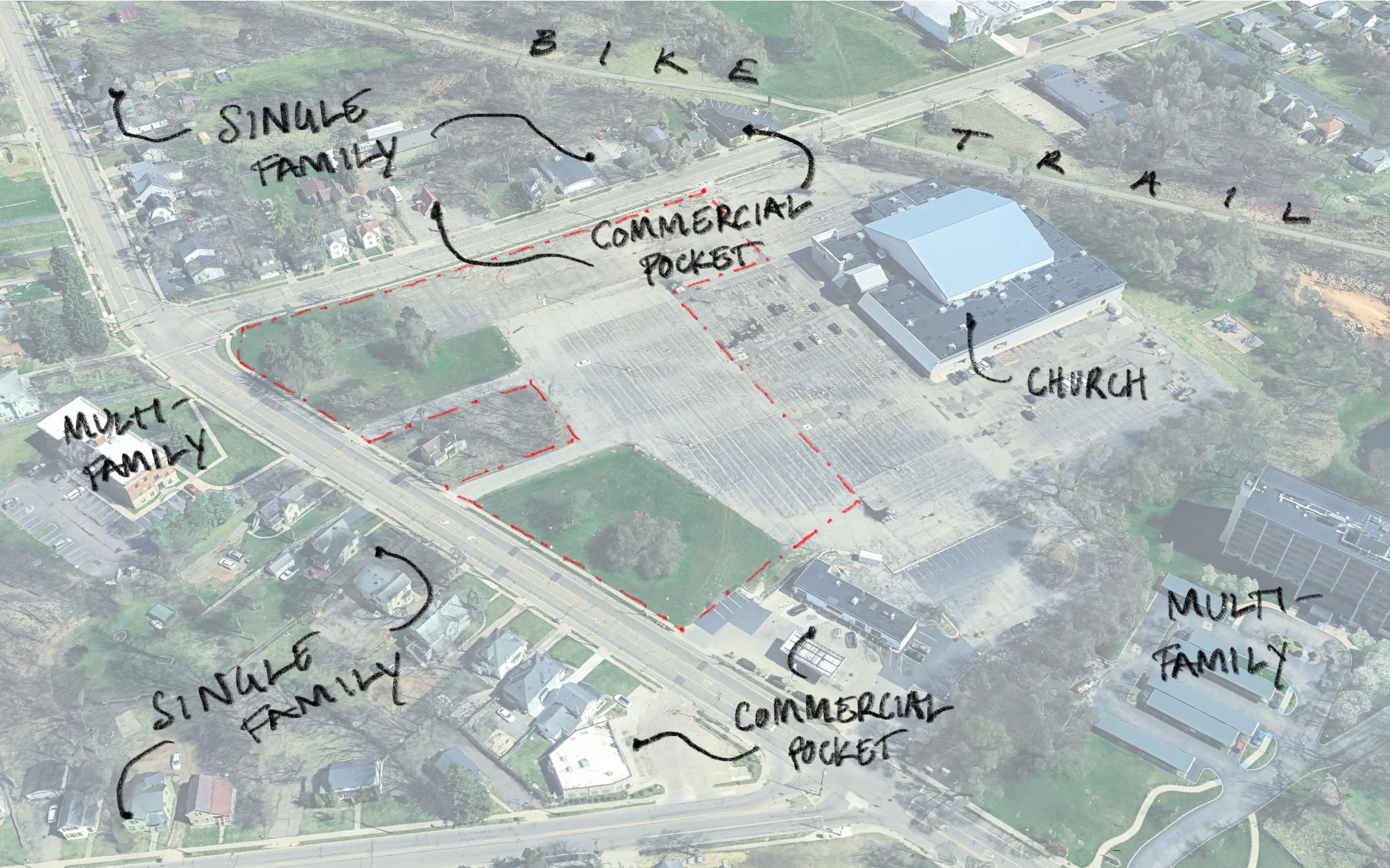
The site is a 30 minute walk/7 minute drive from downtown Kalamazoo. This 5 acre project area is a swath of underutilized green space and asphalt. The first thing I noticed was the HUGE parking lot, but as I looked closer the site was already surrounded by incredible assets, with less than a 5 minute walk to small-scale commercial, single and multi-family housing, miles of bike/walking trail, a community center, local farmer’s market, and of course, a church.
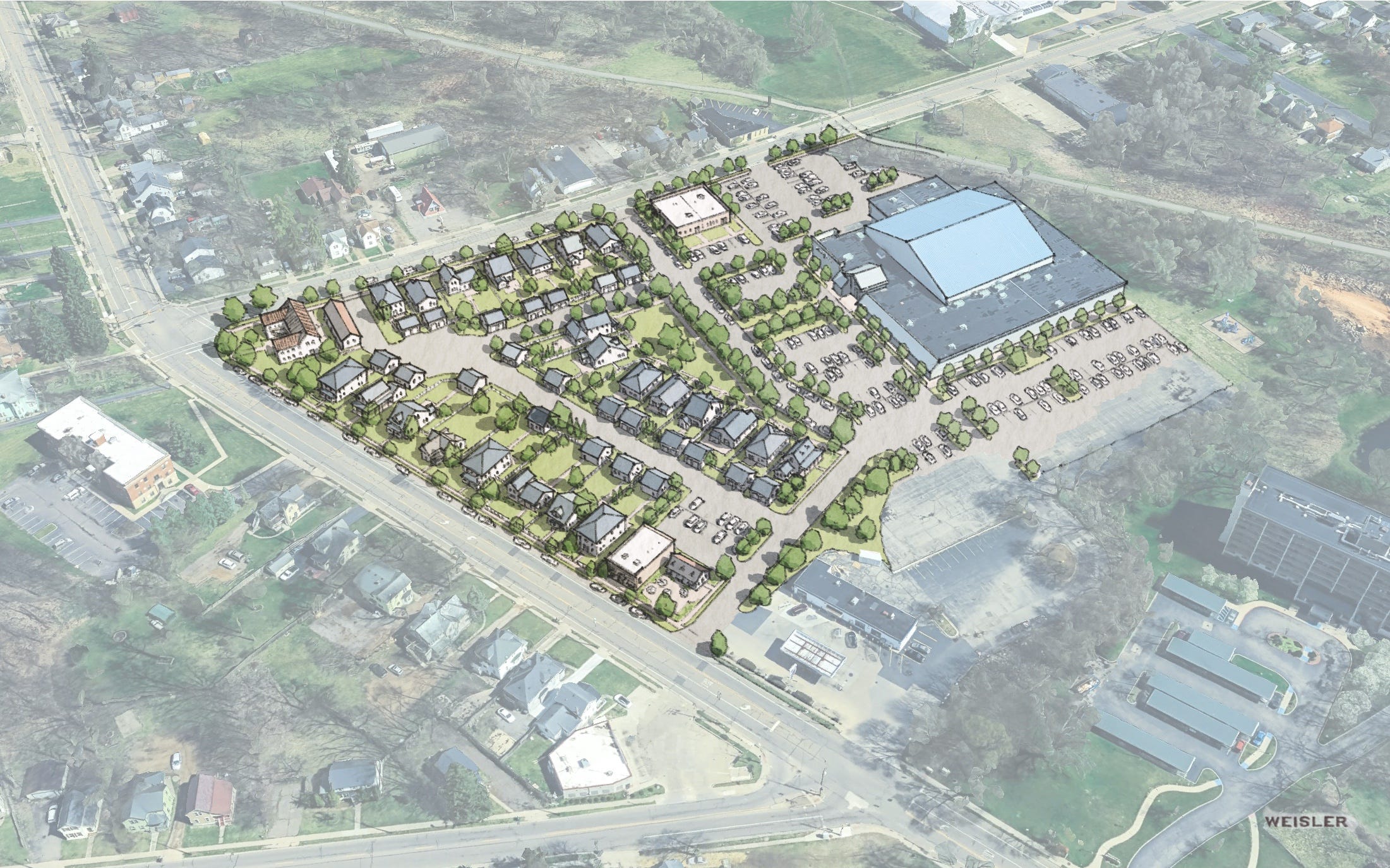
How did you approach this as the designer? What were you hoping to accomplish with the design, and how does that manifest?
My goal was to provide the ‘missing puzzle piece’ for this neighborhood. By mirroring uses across the street, the design helps validate rather than contradict what exists. I proposed a few commercial buildings, a 12-unit condo building on the corner, and a mix of alley-loaded single-family homes. The secret ingredient is the landscape: tree-lined sidewalks and moving the driveway to the alley creates a more walkable neighborhood.
What is your favorite part of the design?
The biggest impact is how the church transformed from an ‘island in a sea of asphalt’ to being a church integrated with the neighborhood, facing a shared greenspace and new internal street. It isn’t just more aesthetically pleasing, it’s a more productive, profitable use of land that stitches the neighborhood together and enriches the ministry of the church to its community.
Project 2: Repairing a Commercial Strip (Cork & Lovers)
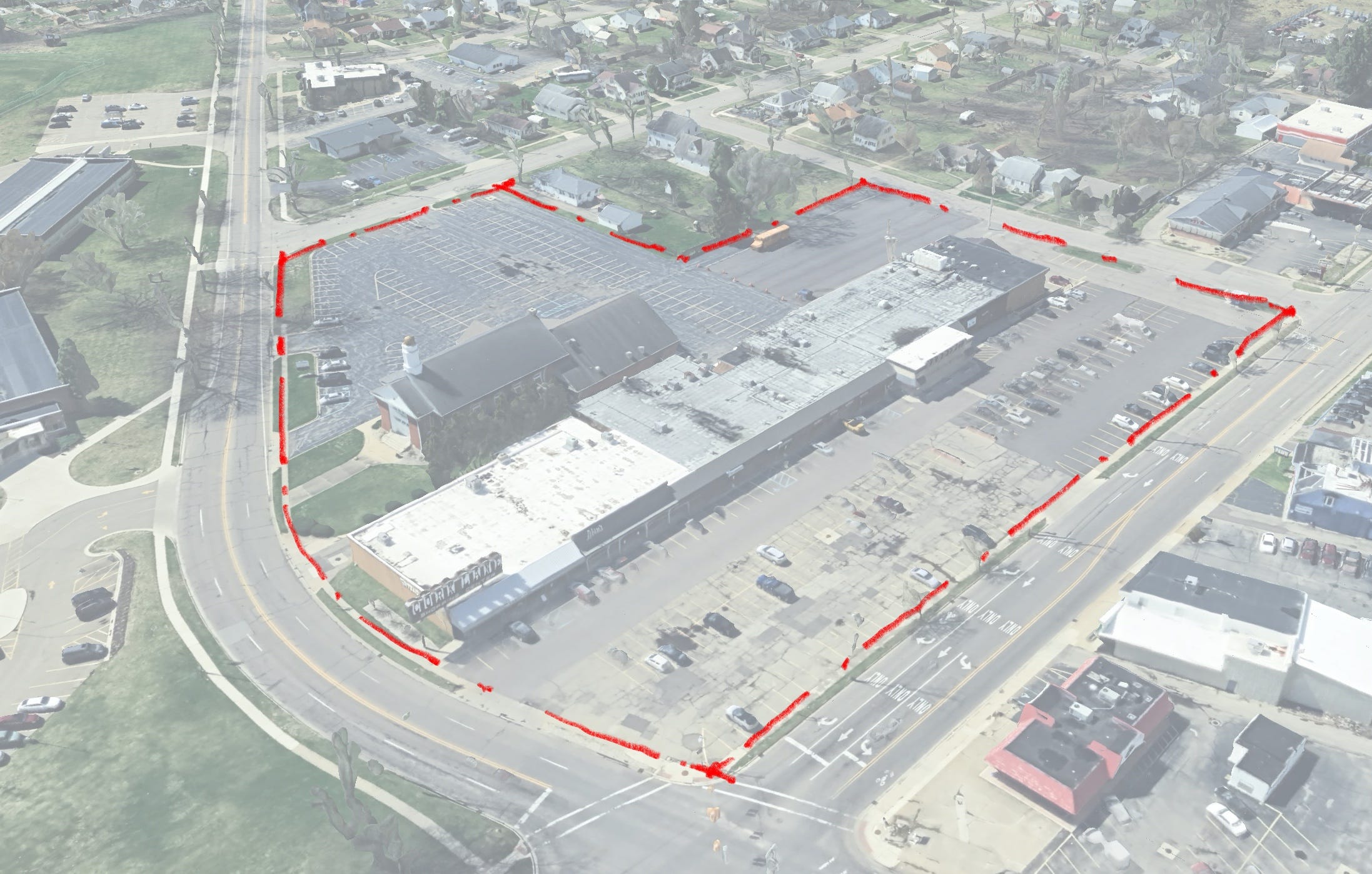
Tell us a bit about the project. Where is it, how large is it, and what are the characteristics of the site as it is?
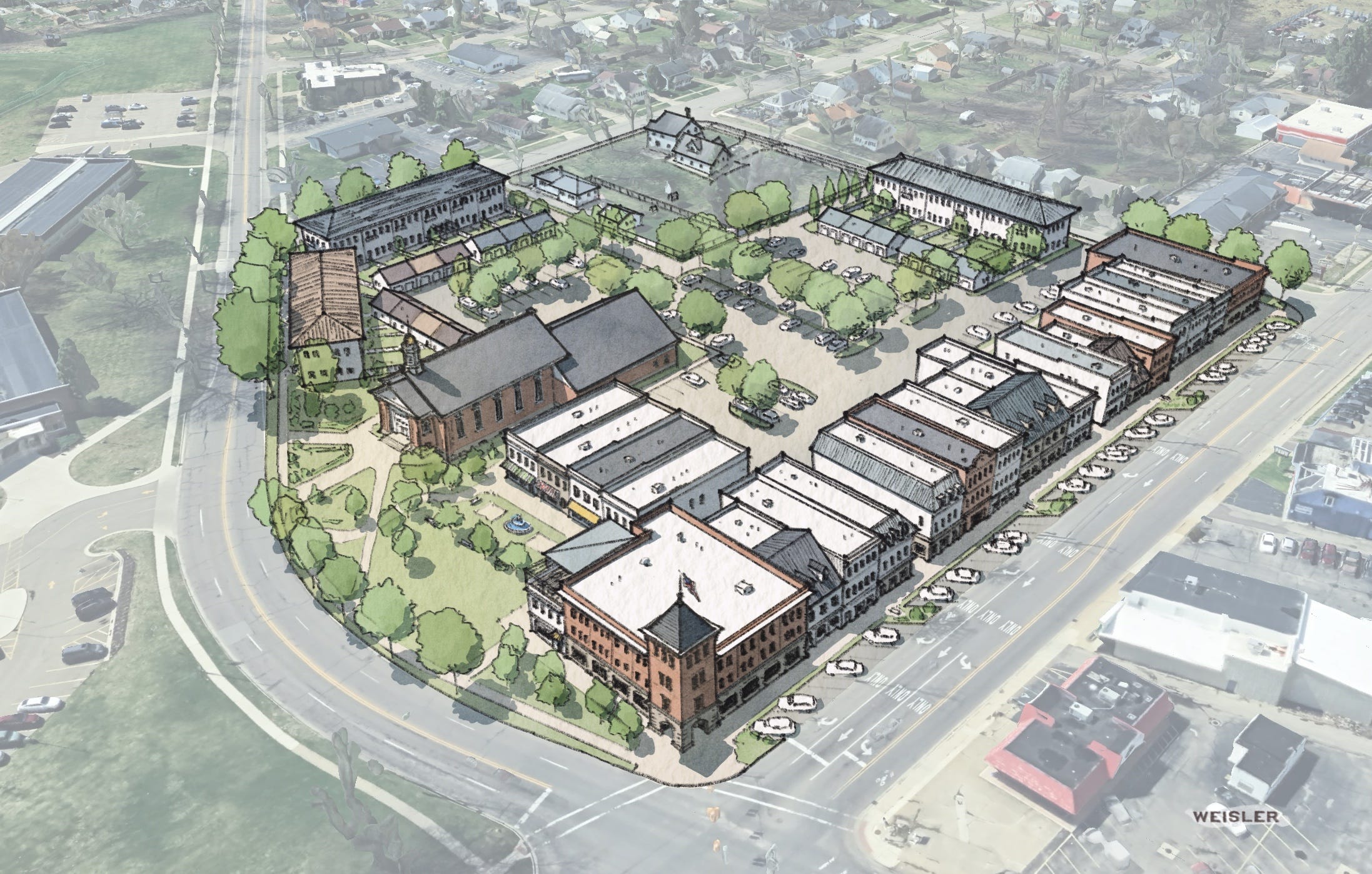
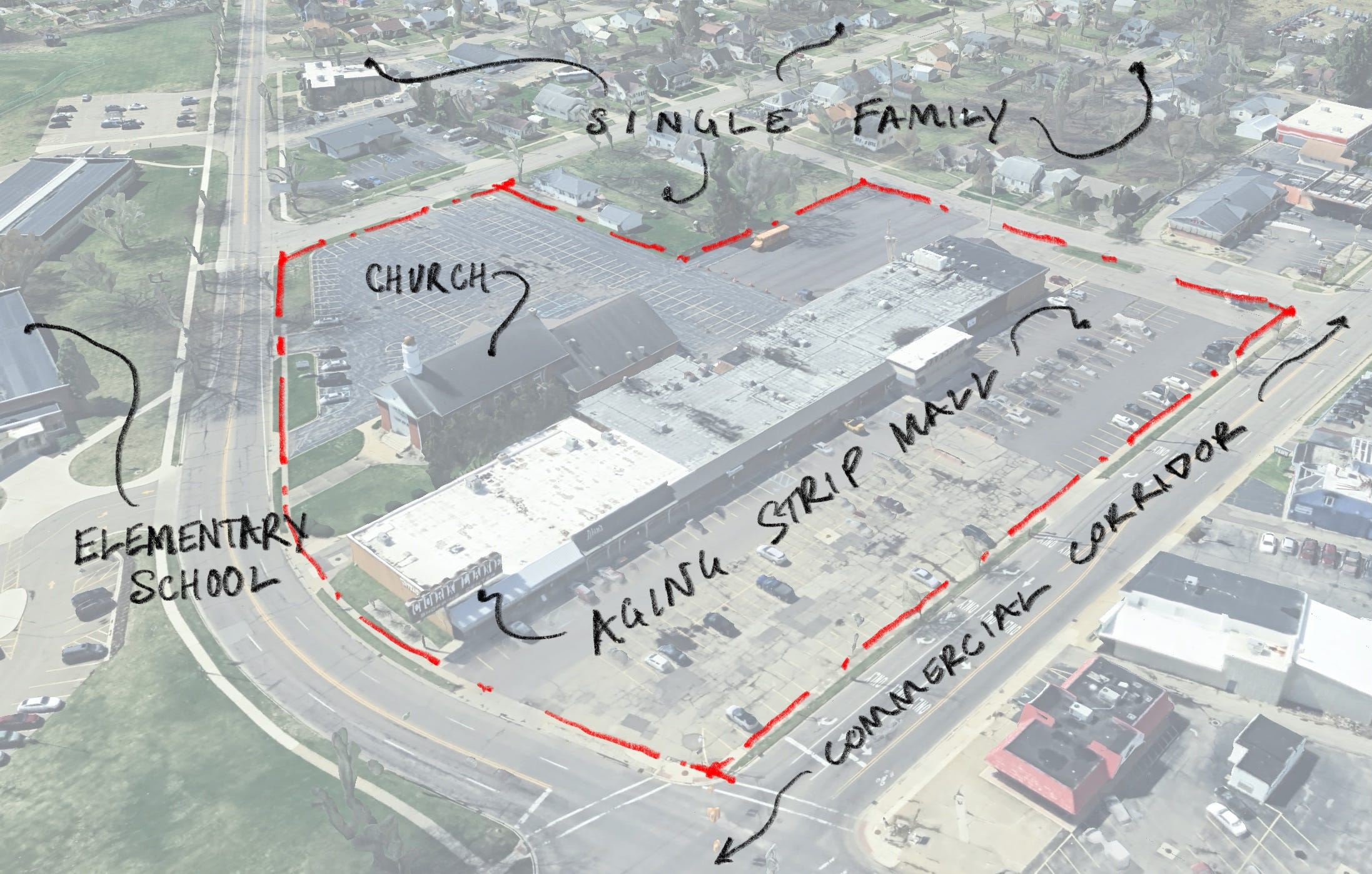
This next project for Kalamazoo, a 5.5 acre site along a commercial corridor suffers from the contemporary classic: an aging strip mall surrounded by too much parking. Despite being next to an elementary school and an established single-family neighborhood, this site was characterized as being ‘obsolete’. The city identified the site as a potential neighborhood center that could also provide housing for teachers.
How did you approach this as the designer? What were you hoping to accomplish with the design, and how does that manifest?
The church is essential for anchoring the site in the community. I proposed the same amount of retail, but this time in a more walkable mixed-use form that defines the street AND provides attainable housing within walking distance to the school for teachers. Townhomes were also proposed facing the school and existing neighborhood and parking was tucked away in the middle of the block.
What is your favorite part of the design?
This design addresses what was missing in the strip mall--human centered design. While on paper this location is a ‘node’ or ‘center’, it lacked a sense of place because it was designed for automobiles. By proposing a tree-lined greenspace shared by retail and the church we create a place worth spending time in. It’s easy to imagine all the family walks after school or church services that simply weren’t possible before.
This is awesome. Empty parking lots like this have so much potential to build community, provide housing, and facilitate businesses. Even from the fiscal standpoint, I never understood why somebody would leave this revenue on the table