
NIMBYs aren't going to hell; they're already there.
What a South Nashville housing fight reveals about comfort, morality, and who counts as a neighbor.

This article originally appeared in Robin Owen’s substack Jesus Urbanist. If you aren’t subscribed to her, you should!
There’s something hellish going on in community meetings all over the country.
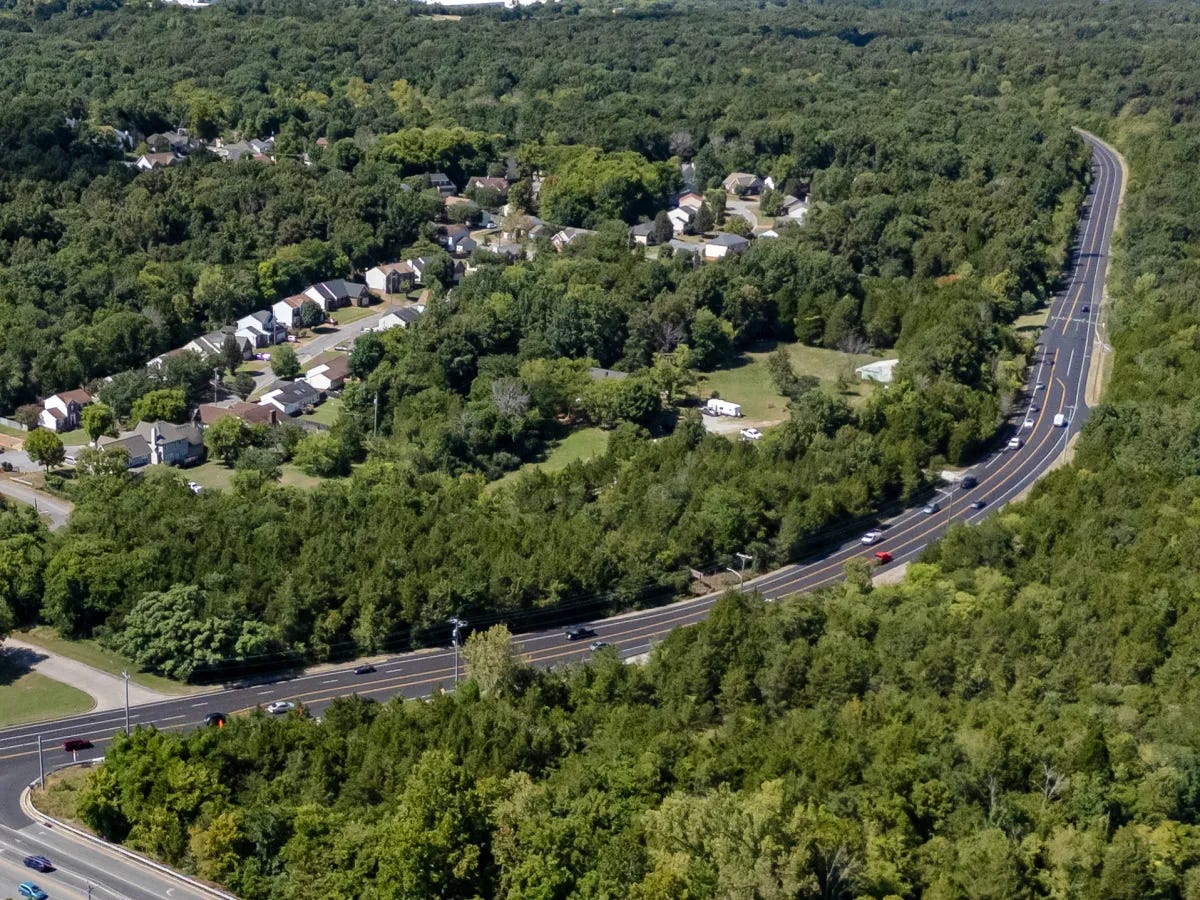
Take, for example, one fight for affordable housing in South Nashville - where I happen to live. A contractor wants to build 64 affordable row homes. Homes that, because of their size and design, would be far cheaper than the median home cost in Nashville. Sixty-four homes for sixty-four families; homes where parents would read to their toddlers at night, where children would ride their bikes, where young couples would start lives together.
The people in these sixty-four homes might have a block party, or invite one another over for coffee, or take walks around their new neighborhood. Its affordable nature would have meant that it could be home to new Americans, immigrants and refugees who would further enrich our diverse part of town. They’d start businesses, pay taxes, send their children to local schools, maybe join a voluntary organization.
It doesn’t sound like such a bad life.
And yet, the neighbors of Bayview are apoplectic. Their objections were familiar: too much traffic, they don’t like row homes, the view might change, new people might bring noise. One resident summed it up: “Build this somewhere else.” Another dismissed the entire idea of affordability: “That doesn’t mean we’re required to fill that slice of the market.”
Strip away the polite phrasing, and the message is clear: we don’t want those people here. Their comfort, their convenience, their property values matter more than whether sixty-four families get a home.
Bayview is not unique.
This is the essence of NIMBYism everywhere: the demand to preserve personal comfort at the expense of human need.
When we’re talking about housing, we’re not just talking codes and permits. At its core, we are talking about whether or not we as a society are willing to build sufficiently so that everyone has a place to call a home, and who we think ought to live comfortably.
In his book Stuck: How the Privileged and the Propertied Broke the Engine of American Opportunity, Yoni Appelbaum compared it to musical chairs. In a Salon interview, he made the same comparison: “It’s like a game of musical chairs where you keep adding players, but not seats, and you give a head start based on wealth. The results are predictably cruel.” Predictably cruel, as in: people getting priced out of their neighborhood, unable to afford a home, being cost burdened by a high cost of living.
If we don’t want a cruel society, we have to build enough housing - provide enough chairs - so that when the music stops, everyone has a place to sit. NIMBYism prefers to leave people standing, if that means that homeowners can keep their neighborhood stuck in time. At the heart of it, what NIMBYs are saying is - “I value the status quo of my neighborhood over the wellbeing of the people around me.”
This attitude has real world consequences. As a nation, we are short millions of units of housing. Nearly one-third of Americans are cost-burdened by our housing shortage. Nearly 150,000 children are homeless across our country, and elder homelessness is on the rise, too. Millions more are housing insecure and “double up” with family and friends. This is a direct result of the rise in housing costs created by our shortage in homes.
NIMBYism might not be the only reason for our housing shortage, but it looks at our situation and says: “that is someone else’s problem. Am I my brother’s keeper?”
For anyone who takes seriously the teachings of Christ, it should be obvious that this is incompatible with our faith.
If we call ourselves Christians, we are compelled to care for the poor, the sick and disabled, the immigrant, the imprisoned, the lonely and the suffering. In short - to love our neighbors.
Luke tells us that Jesus’s admonition to love our neighbors as ourselves, a teaching he himself would have learned from the Hebrew Bible, was prompted when a lawyer asked him a very NIMBY-like question:
On one occasion an expert in the law stood up to test Jesus. “Teacher,” he asked, “what must I do to inherit eternal life?”
“What is written in the Law?” he replied. “How do you read it?”
He answered, “‘Love the Lord your God with all your heart and with all your soul and with all your strength and with all your mind’; and, ‘Love your neighbor as yourself.’”
“You have answered correctly,” Jesus replied. “Do this and you will live.”
But he wanted to justify himself, so he asked Jesus, “And who is my neighbor?”
Luke 10:25-29, NIV
Maybe someone was talking about building a new little home (or maybe even 64 of them) next to the lawyer. Maybe, given Jesus’s story, the developer was a Samaritan - a foreigner who prayed the wrong way. Hoping he can find a loophole in the teachings of the Hebrew Bible (such a clever lawyer), he asks - but who is my neighbor?
Perhaps, if they were talking today, the lawyer read “love your neighbor as yourself” and thought “That doesn’t mean we’re required to love everyone.”
But doesn’t it?
To be fair to one Bayview neighbor who dismissed the notion of more affordable housing, his statement (“That doesn’t mean we’re required to fill that slice of the market.”) rings true in the wisdom of the world. The teachings of Christ remain compelling, even shocking, because they run so counter to our first and most base impulse.
In the wisdom of the world, someone’s need doesn’t mean that you are required to fill it. In the world’s wisdom, aesthetics might be more important than someone’s livelihood. You might be perfectly justified in preferring your peace and quiet over the boisterous lives of sixty-four families. You could be excused for wanting to preserve your neighborhood’s “character,” even if it means making things harder for other families.
But for Christians, there is no choice.
It is always more important that children have a place to live than that their neighbor likes the aesthetics of their home. It is always more important that the poor and working class are not further impoverished by high housing costs than a homeowner’s concern about traffic or ordinary residential noise.
Following the teachings of Christ means...
... I’d rather live near ugly buildings than have my neighbors priced out of their home.
... I’d rather sit in traffic than have my neighbors go homeless.
... I’d rather hear my neighbors than the working class be pushed into poverty.
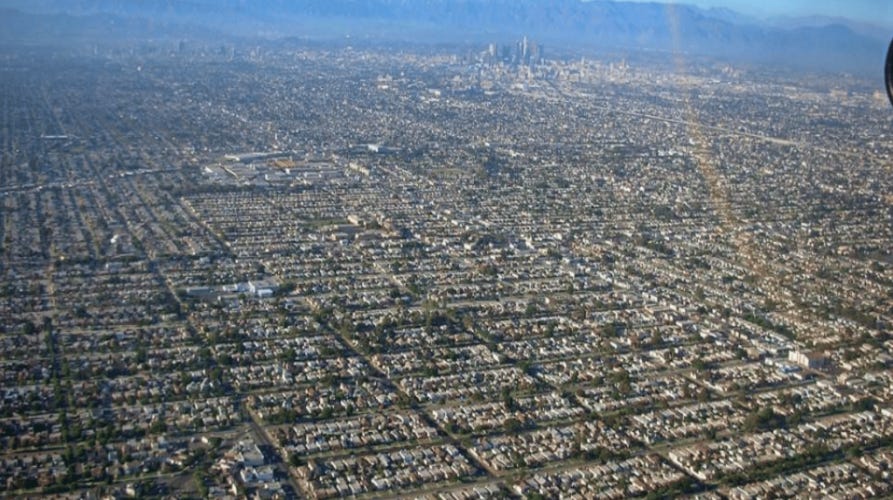
In The Great Divorce, CS Lewis describes hell not as a burning lake of fire, but as the Grey Town. It is an endless, sprawling suburb where people live spread out from one another simply because they cannot stand to be near one another.
The people of Grey Town can imagine whatever they think they need, and so “it never costs any trouble to move to another street or build another house. In other words, there’s no proper economic basis for any community life. If they needed real shops, chaps would have to stay near where the real shops were. If they needed real houses, they’d have to stay near where builders were.”
But they prefer their “perfect” aloneness.
They want their neighborhood just so, their home just right, and they don’t want to have to deal with any inconvenient, pesky neighbors. If they didn’t mind the inconvenience of neighbors, “two fully-inhabited streets would accommodate the people that are now spread over a million square miles of empty streets.”
Famously, Lewis wrote in the Great Divorce that “the gates of hell are locked from within.” Everyone in Grey Town could leave if they wanted (on a bus no less; sounds like Lewis was actually an urbanist), but the residents choose to stay in a hell of their own making.
If someone wanted to build sixty-four affordable homes for sixty-four families near you in Grey Town, you could simply imagine yourself blocks and blocks away. Or, I suppose, you could yell and curse at the developer until they abandoned the project.
Either way, in our fear of neighbors and neighborhoods, we’ve created hell for ourselves.
In The Great Divorce, the narrator simply ends up there one day. But we are building hell day by day, community meeting by community meeting, ordinance by ordinance, zoning law by zoning law. We are so allergic to the idea of townhomes, affordable homes, neighbors close to us, public transit, density, “ugly” buildings - whatever reasons that NIMBYs cite as their objection to building more homes - that we lock ourselves in hell.
So is it any surprise that there are hellish realities in our communities?
If we take seriously the teachings of Christ, then we would know that our neighbor’s wellbeing is our call, our responsibility. We cannot pass the buck to the next neighborhood, but stand in our own community meetings and say: I want my neighbors to find a home, to build a life for themselves, to create families here, to live near me and build community with me - yes, in my backyard.
Robin Owen is a pastor in the ELCA, writer, and an advocate for safer streets and multimodal access. She’s passionate about how our cities shape our lives, and how the teachings of Jesus call us to build our cities differently.
 | A guest post by
|
The Grey Town metaphor from CS Lewis hits different when applied to zoning policy. The musical chairs framing really clarified how ordinances that restrict housing supply aren't just about aesthetics or traffic, they're actively removing seats from the game. I grew up in an area where 'neighborhood character' became code for exclusion, and this piece nails how that comfortable language conceals somethnig darker. The progression from personal convenience to systemic exclusion through zoning regs is what makes NIMBYism uniquely harmful compared to just individual selfishness.
Hell hath an open border, Heaven has a gate.
The great walkable, edifying & dense traditional cities of Christendom were made up of cohesive religious polities and populations. When living in such close proximity, it was necessary that these bonds of ethnos, religio & way of life were tight, as these were the building blocks, not the disruptors, of real culture and the enriching public realms they made. The lesson of the great Christian cities is not an affirmation of blank slate modernism, but instead it's very refutation. The distinct urban artifacts of the peoples of Christendom tell you the nature and character of the peoples themselves, the very architecture speaks to their unity of religion, custom, ethnos, language & tradition. It is from this physical & metaphysical cohesion that we can tell an Etruscan Settlement from a Roman settlement, or a Lombardian village from a Germanic village. In the larger cities there are great examples of foreign quarters, but they are just that, colonies of a foreign people in a foreign land, distinct to them and their way of life. Such quarters can only exist for the good of both parties when the host body is healthy and cohesive, and we shouldn't underestimate the tension and discord that having such quarters sewed. (I think of the tensions between the Byzantines and Venetians in Galata for example... it was certainly economically advantageous but was a source of centuries of strife & tragedy). There is something to be said for a crossroads city, but there is also something to be said for a shire. I ask you, where can Americans build their shire?
We will always have New York, but must Galena, Illinois or Nantucket Island become a New York too?
Americans deserve their own dense walkable polities emblematic of their traditions, for themselves and their posterity. Only then can they host a few other choice peoples at a time for their assimilation. These are the hearths of tradition from which a life of charity springs.
Where can I take my children to raise them in a distinctly American, distinctly Christian and dare I say even Catholic way of life? We the young Christian men of the west are looking for hometowns to raise our children in with the cohesion our parents naturally enjoyed and finding it almost impossible. We are already deracinated; we are looking for roots.
We are looking for something, anything, to find in common with our neighbor.
Air dropping foreign brothers and sisters into a cohesive polity doesn't enrich it for either group & sews the seeds of discord & deracination for both. If there is any hope of newcomers being assimilated into an American way of life, then the host body cannot be overwhelmed, the original people and their traditions must first be established healthy, dominant, and secure.
NIMBY's suspect that urban density is a globalist plot to destroy their neighborhoods, and your professed attitude here proves their point. We would have a much easier time selling density to Americans if they knew it was actually for their own children to start homes and form community bonds & roots of tradition. Instead, you are proving their fears by insisting we fill every potential starter home with a refugee from a far-off nation of people who haven't lived alongside them since days of the Tower of Babel.
Inner-city crime and mass immigration have driven Americans to the suburbs. If you insist on inflaming those societal disruptors out of a false sense of Christian charity, you will keep American NIMBYS clinging zealously to their plastic disposable auto-sprawl.
I do think Americans can overcome their NIMBYism and start forming small dense polities again, with wide ranges of housing types to help out different ages and incomes, but only if they are allowed to gatekeep their distinctly American towns with gates & walls akin to those of the glorious & zealous Christian cities of old Christendom.
God Bless.