
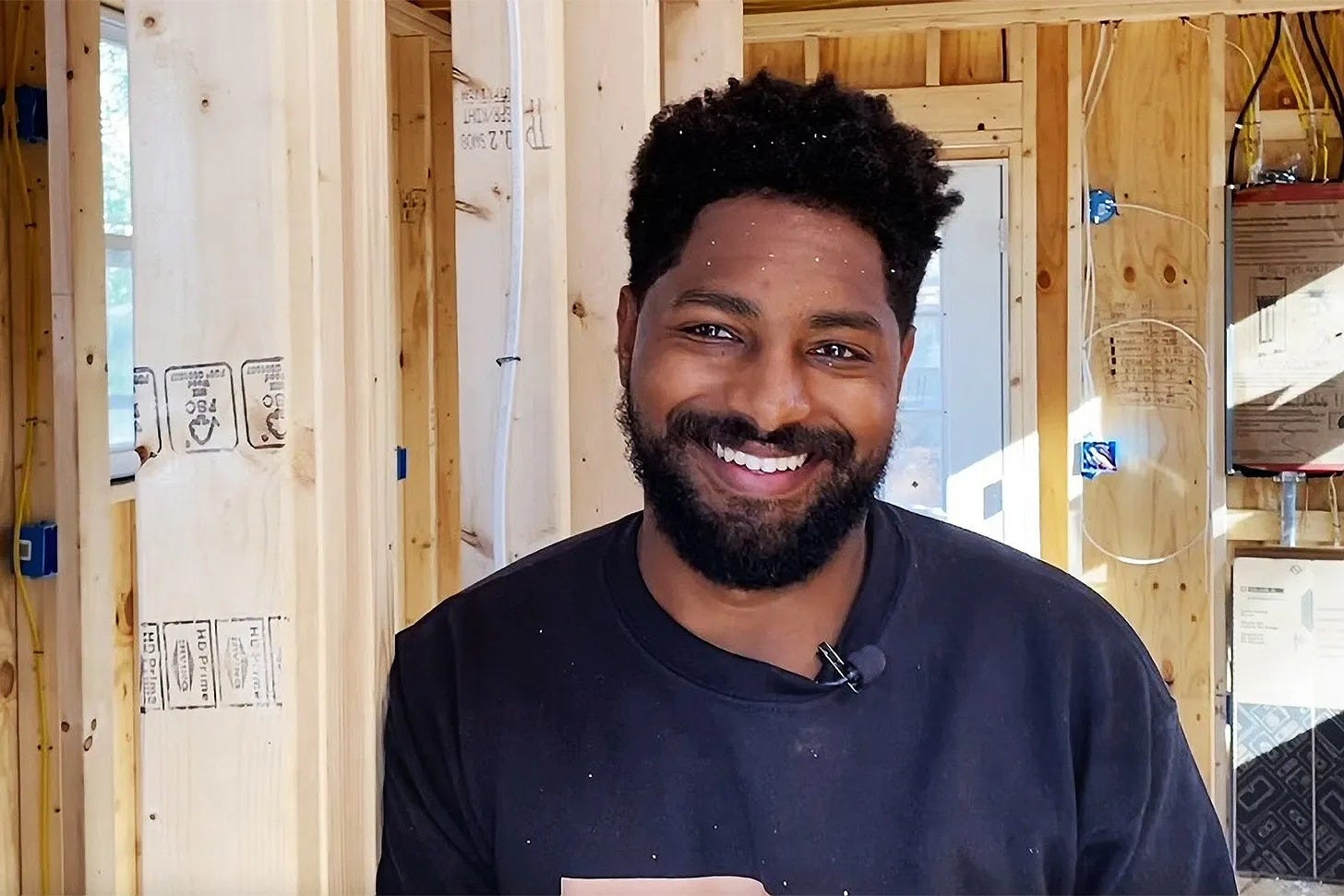
Written by Topher Thomas.
This article is a guest piece by Topher Thomas, a builder in Durham, NC.
The church, long a hallowed space of transcendence and pursuit of justice, finds itself in steep and steady decline.
Church attendance dwindles year after year. Churches are closing their doors, because they simply cannot afford to keep them open anymore. It is much a crisis of faith as it is a crisis of financial sustainability. The church in America is dying, at least the church as it is. Maybe this death is making way for something more, something different.
At the center of the Christian tradition, the tradition I locate myself within is a spiritual imperative to care for the marginalized. We find here a God who could not be God without us, demonstrating to us our inherent divinity. Maybe in this death, as the old way decomposes into the soil, new ways to achieve that imperative and to embody that God are ready to grow.
One such way, a simple way, is the provision of shelter.
Churches own vast amounts of land, and land in our society is a commodity, a valuable commodity. For better and worse, ours is an economic system that thrives on commodification, extraction, and inequality particularly and most acutely through land. I wonder, can the church, in its pursuit of providing housing for the vulnerable, become a catalyst for a different economic order?
Can it embody a redemptive capitalism, a praxis that restores rather than depletes? Can it be a place where the logic of domination, inherent in Western thought, is challenged? Can it be a witness to a different way of being in the world, a way marked by love, justice, and shalom?
My heart says the church can be all the things listed above. It can do so through radical development. Radical in that it faces the reality of financial sustainability without sacrificing on mission. We can’t reside purely in the theological, we must take great care to have good pro formas, budgets, projections, and we must allow our theology to inform our economics.
This is not a rejection of profit, but it is a reorientation of priorities.
The church’s mission is not driven by the relentless pursuit of wealth accumulation, but in pursuit of creating a shared and hopeful future. Radically upending the typical modes of exchange, exploitation, and debt. With this posture, the church possesses a unique opportunity to demonstrate in its use of land a different economic model. A model that prioritizes people over profit, community over competition, and, critically, doing so while exercising financial prudence.
Stewardship, after all, is about managing resources wisely. Financial sustainability, however, should be pursued not as an end in itself but as a means to an end—not merely to the end of just affordable, quality housing, but to housing that seeks human flourishing.
The church can become a catalyst for economic development within its community.
By investing in faith-based housing, it can and will create jobs, stimulate local economies, and strengthen neighborhoods. This is not about building houses, though that is needed, but about building communities. It is about creating spaces where people can thrive, where they can experience a sense of belonging and purpose. And isn’t that “good news”?
Of course, the road to redemptive capitalism is fraught with challenges. There are systemic barriers to overcome, and the temptation to compromise on values is ever present. But the church has the power to be a beacon of hope, a living example of a different way of doing business.
Development is not an execution of perfection. It is about incremental betterment. There are no shortcuts. It is hard work.
By embracing its role as a steward of resources and a champion of the marginalized, the church can demonstrate that it is possible to build a more just and equitable world, one house at a time.
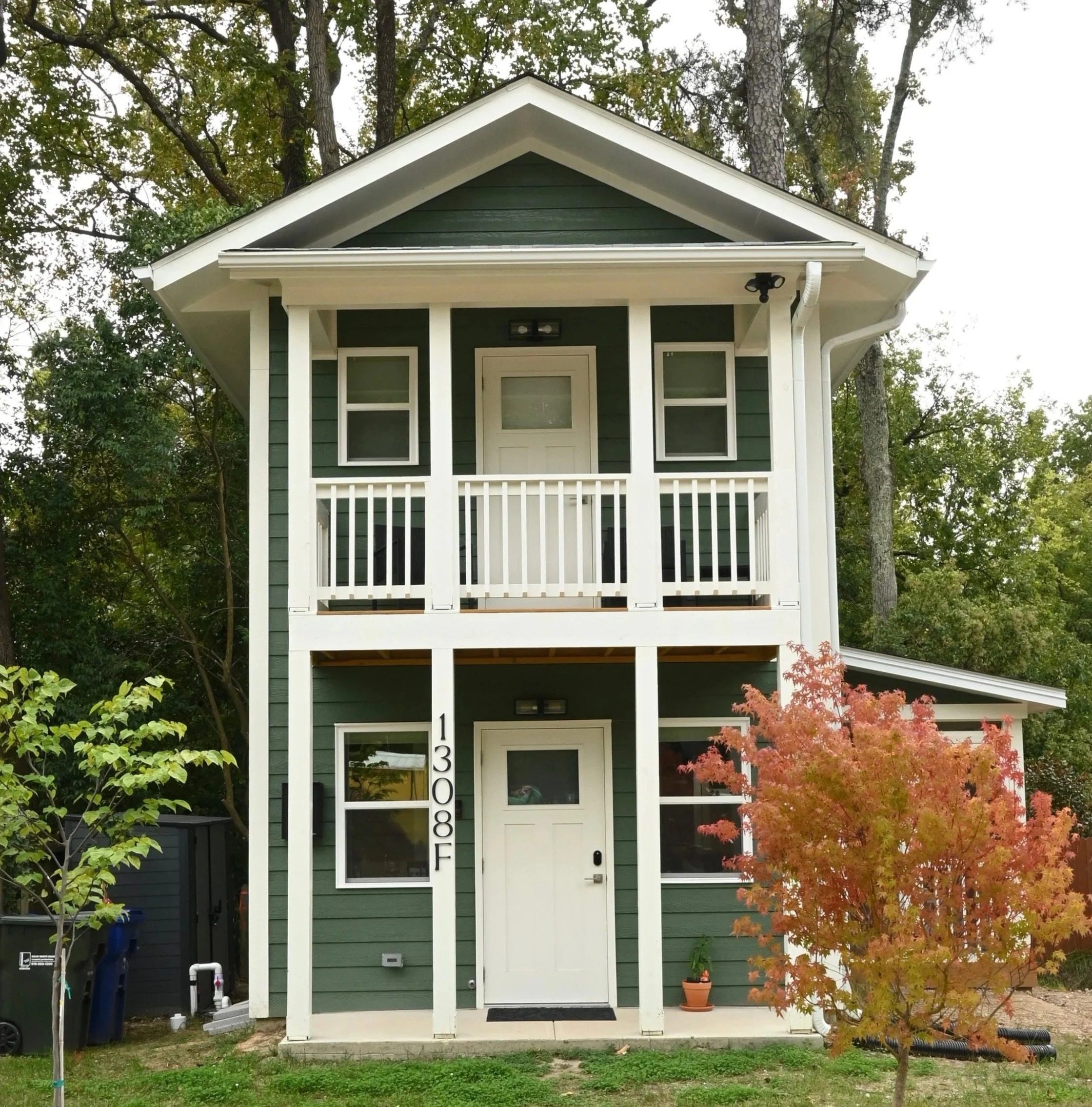
A few years ago, I started a homebuilding company called Coram Houses.
“Coram” came from a theological phrase, “Coram Deo” … meaning “in the presence of God”. I was captivated by what it meant to live in the presence of God. What it grew to mean to me was to be present to reality, to be present to what is. We do live in a world shaped by deep systemic inequalities. The political and economic powers that currently exist perpetuate these inequalities.
My small response to these infinite problems was to share. It was to build a small house in my backyard as an invitation into a different way to be in the world. My small response turned into a company that builds small houses in small yards to share a thing we’ve shared all along. We even embarked on the journey of building small houses in a church’s backyard.
Much of what I’ve written here is inspired by that church. They faced the dual reality of limited funds coming in and neighbors in need of affordable housing. They recognized the acres of land they had. Acres used by grass, and beetles, and dragonflies, but in the face of human suffering and the opportunity to alleviate some of it, this church is stepping up.
This moment in time is an invitation for all of us who see the need to step up, and may we heed the invitation.
Topher Thomas is the founder of Coram Houses, an ADU builder in Durham, North Carolina.
Funny, I'm probably posting today about a cleaner, but profane, revenue stream--cell towers shaped like crosses. This feels so very messy, but so near to the heart of God.