
Written by Jarah Jacquay
In Pensacola, Florida, where I live, there are children for whom “home” is a rotating schedule of couches, spare rooms, motels, and borrowed beds. They show up to school tired. They carry their lives in backpacks. They learn early how to answer the question “Where do you live?” in ways that avoid embarrassment or attention. By the definitions used by school districts and social service agencies, many of these children are described as “housing insecure” rather than homeless. The distinction is thin. The instability is real.
These children know things they should not have to know. They know which fast-food restaurants have the cleanest bathrooms to wash up before school. They know how to appear fine when they are not. They know the quiet shame of never being able to invite a friend over, because there is no “over” to invite them to. Over time, this instability hardens into chronic stress, disrupted education, fractured relationships, and a lingering sense of not fully belonging anywhere.
This is not a marginal phenomenon.
It is a quiet, grinding sorrow that now marks communities across the country, often hidden behind ordinary routines and polite language. It is also a sorrow that has a location.
Grief, in this case, has an address—though it changes far too often.
The Second Vatican Council did not imagine the Church as a spectator of such suffering. Gaudium et Spes, the Pastoral Constitution on the Church in the Modern World, opens with one of the most direct claims the Church has ever made about her identity and mission: “The joys and the hopes, the griefs and the anxieties of the people of this age, especially those who are poor or in any way afflicted, are the joys and hopes, the griefs and anxieties of the followers of Christ” (GS §1).
This is not pious rhetoric, but a theological claim with moral consequences. The Church does not merely sympathize with the world’s wounds; she receives them as her own. And if that claim is to mean anything beyond sentiment, it must shape how the Church understands her mission in the concrete conditions that make stable human life possible. Housing insecurity is one of those conditions.
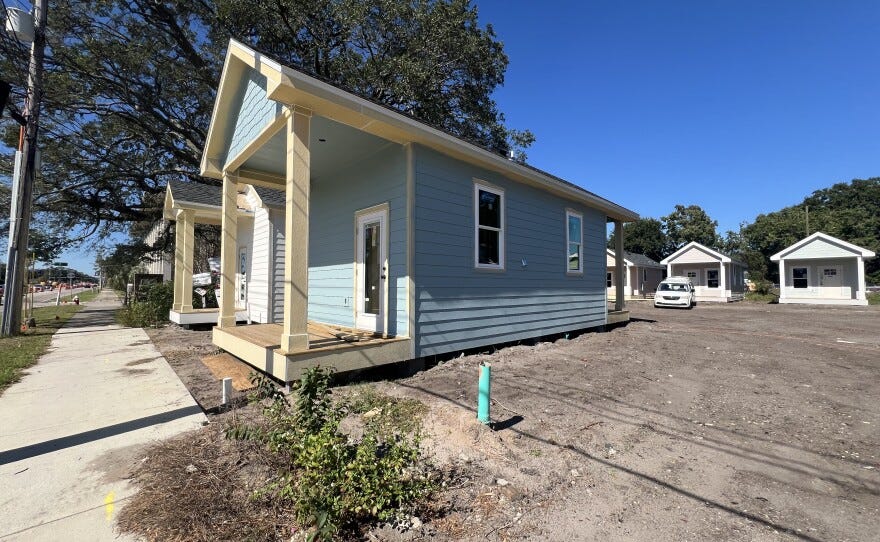
Housing is often treated as a technical problem—something for markets, planners, or policymakers to resolve. From a Catholic perspective, that framing is incomplete. Housing is a pastoral reality because it touches nearly every domain of human flourishing the Church is charged to care about: marriage and family life, the raising of children, care for the elderly, stability of work, and the formation of community.
As part of my participation in the Notre Dame Eucharistic Culture Program—a two-year formation initiative connected to the University of Notre Dame’s Church Properties Initiative—I have been studying how the Church understands the stewardship of her temporal goods in light of the Eucharist. The program draws directly from Vatican II documents, canon law, and the Catechism of the Catholic Church, and it asks a practical question with profound implications: how might the Church more faithfully align the use of her land, buildings, and financial resources with her calling to carry out the corporeal and spiritual works of mercy?
The Catechism is explicit: “God intended the earth with everything contained in it for the use of all human beings and peoples” (CCC §2402).
Private property, while legitimate, is never absolute: “The ownership of any property makes its holder a steward of Providence, with the task of making it fruitful and communicating its benefits to others” (CCC §2404). Canon law echoes this same teaching, ordering the Church’s temporal goods toward divine worship, “the decent support of the clergy and other ministers,” and “works of the sacred apostolate and of charity, especially toward the needy” (CIC can. 1254 §2). This language matters. It situates housing within the Church’s broader apostolic mission and explicitly includes the support of lay ministers and professional labor ordered toward that mission.
Scripture leaves little room for evasion.
James warns that faith without works is dead (James 2:17). At the same time, works severed from faith—forgetting that “the earth is the Lord’s and the fullness thereof” (Ps. 24:1), that every human person bears the image and likeness of God, and that “whatever you did for one of the least of these, you did for me” (Matt. 25:40)—devolve into something else entirely: social Darwinism, tribalism, or a war of all against all, where power and advantage replace mercy and justice.
The Church’s task is to hold faith and works together. To confess Christ is to accept responsibility for the conditions in which human beings live. Faith-based housing, then, is not ideology. It is discipleship with an address.
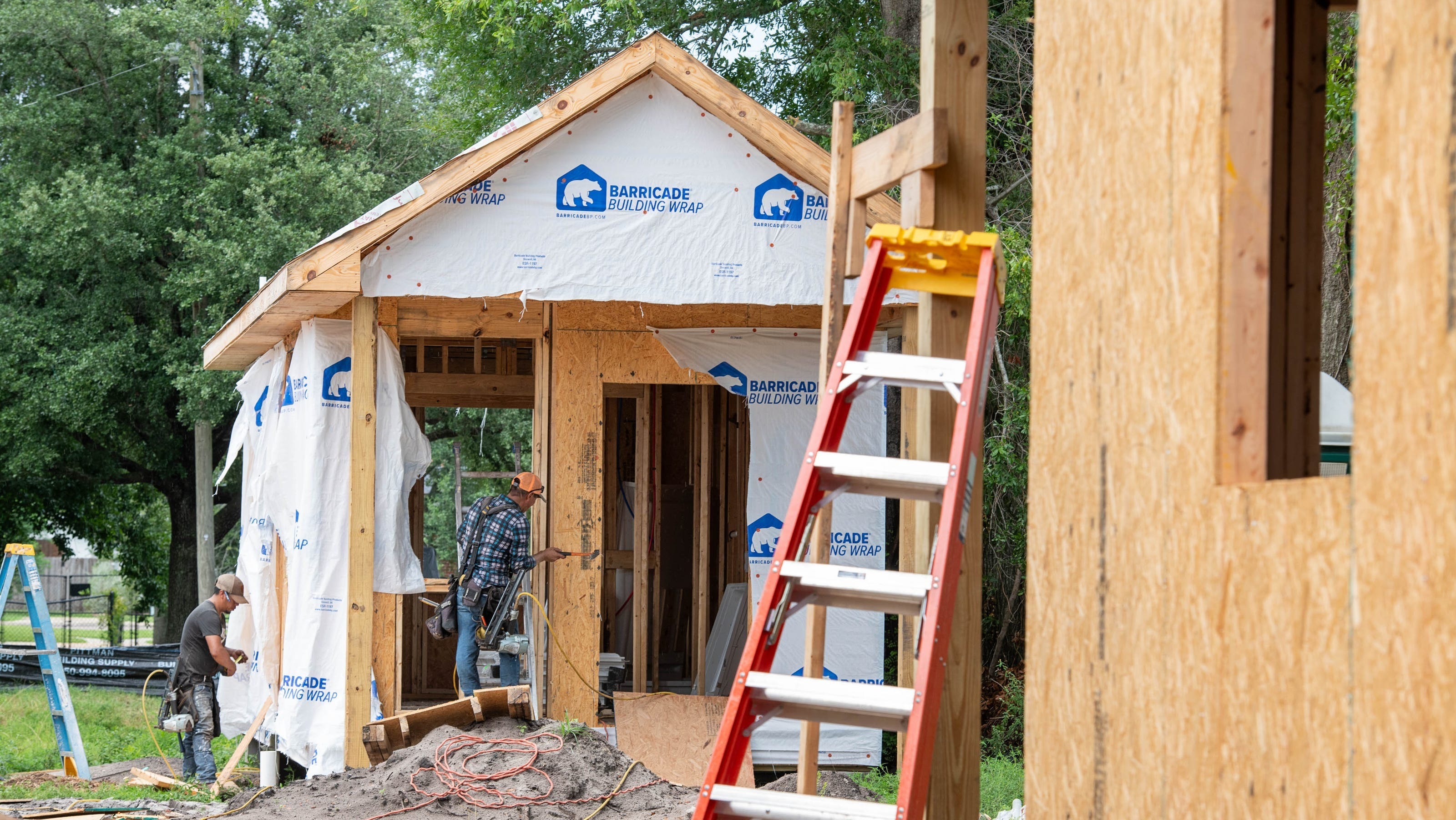
The Church does not need every parish to become a developer.
But she does need leaders willing to ask how land, capital, and professional expertise might be stewarded for the common good. Catholic Charities and diocesan institutions already possess significant experience in housing and social services. This capacity should be strengthened and expanded, not as technocratic management, but as an extension of the Church’s mission of mercy.
But the Church’s mission in the world ordinarily takes flesh through the laity. Gaudium et Spes is clear that lay men and women are not secondary actors in the Church’s engagement with modern life, but its primary agents within the secular order. Housing, finance, law, construction, planning, and public administration are not peripheral to the Church’s witness; they are among the principal arenas in which the Gospel is meant to be lived.
What is often missing is not goodwill or concern, but sustained and rigorous formation that equips lay professionals to exercise judgment shaped by Catholic social teaching. The Church needs societies, apostolates, and formation initiatives that gather architects, developers, bankers, and planners—not for occasional talks, but for serious, ongoing formation that integrates faith and professional competence. Without that formation, even abundant resources struggle to bear lasting fruit. The Notre Dame program I’ve participated in is one example; there should be dozens more, sponsored by dioceses, parishes, and lay movements, creating a generation of professionals who understand their work as Christian vocation. This is not ancillary to the Church’s mission. It is how hope gets an address.
Grief has an address. Hope must have one too.
Jarah Jacquay is a husband and father of seven, a community leader, and the Founder and Managing Principal of Virtuous Cycle LLC, a Pensacola-based real estate development and advisory firm focused on housing, placemaking, and long-term community resilience. He is also the Co-Founder and President-Emeritus of Bluffline Inc., a nonprofit advancing trail, greenway, and public-space projects that strengthen neighborhood health and connectivity in Northwest Florida.
Jarah was received into the Catholic Church in 2021 and draws inspiration from Gaudium et Spes, which insists that the Church’s faith must take form in the concrete conditions of human life.